
Your 3.5L EcoBoost can make strong power and still return decent mpg, but that balance disappears fast when a few small parts stop doing their job. If your fuel economy has dropped into the low teens, the problem may not be dramatic enough to feel from the driver's seat.
On Sell Those Flipping Cars, a veteran mechanic with more than 20 years of shop experience points to three common causes: spark plug gap growth, intercooler heat soak, and a neglected PCV valve. Catch them early, and you can often stop the engine from wasting fuel before the problem gets expensive.
https://www.youtube.com/watch?v=vheM9x7C_64
Why your 3.5L EcoBoost mpg can fall without a major warning light
One reason the 3.5L EcoBoost frustrates owners is that poor fuel economy doesn't always show up with a loud, obvious symptom. The engine can still start, idle, and pull hard enough to seem fine, while the ECU keeps adding fuel in the background to protect the engine or clean up combustion.
That is the thread connecting all three issues in the video. Each one changes what the ECU "sees," so the computer reacts with more fuel than the engine would need in a healthy state. The result is a truck or SUV that still runs, but drinks fuel like something is off.
Here's a quick snapshot of the three problems discussed in the video:
| Fuel economy killer | What changes | ECU response | Likely result |
|---|---|---|---|
| Spark plug gap growth | Spark gets weaker under boost | Adds fuel to compensate for incomplete burn | Lower mpg, weak efficiency |
| Intercooler heat soak | Intake air temps rise | Pulls timing and runs richer | Poor mileage in traffic or towing |
| Lazy or clogged PCV valve | Oil vapors enter intake | Adds fuel to protect from knock | Dirty intake path and worse mpg |
The big takeaway is simple: fuel economy loss often starts with compensation, not failure.
If you want a fast first check, look at your fuel trims with a scan tool. The video points readers to the STFC Pro-Grade Bluetooth code reader, which can help you see whether the ECU is correcting harder than it should.
The video also breaks the problem into these chapters:
- 00:00 The 3.5L EcoBoost MPG problem
- 01:17 Killer #1: Spark Plug Gap & ECU Compensation
- 01:57 Killer #2: Thermal Inefficiency (Intercooler Heat Soak)
- 02:43 Killer #3: The $15 PCV Valve
- 03:29 The oil catch can solution for the 3.5L EcoBoost
A quick diagnostic tip before you buy parts
Check short-term and long-term fuel trims before replacing anything. If the numbers look off, you're seeing evidence that the ECU is already working around a problem instead of running its normal, efficient calibration.
A 3.5L EcoBoost can lose mpg long before it shows a hard misfire or a major drivability complaint.
Spark plug gap growth can quietly hurt 3.5L EcoBoost fuel economy
High boost makes life hard on spark plugs. Inside the cylinder, the ignition system has to fire across a gap while pressure is much higher than it would be in a naturally aspirated engine. Over time, that gap grows, and even a few thousandths of an inch can matter.
According to the video, this doesn't always create a misfire you can feel. Instead, it can cause an incomplete burn. The ECU reads that condition, interprets it like a lean event, and adds more fuel to cover it. You may never notice a dramatic stumble, but you'll notice more gas station stops.
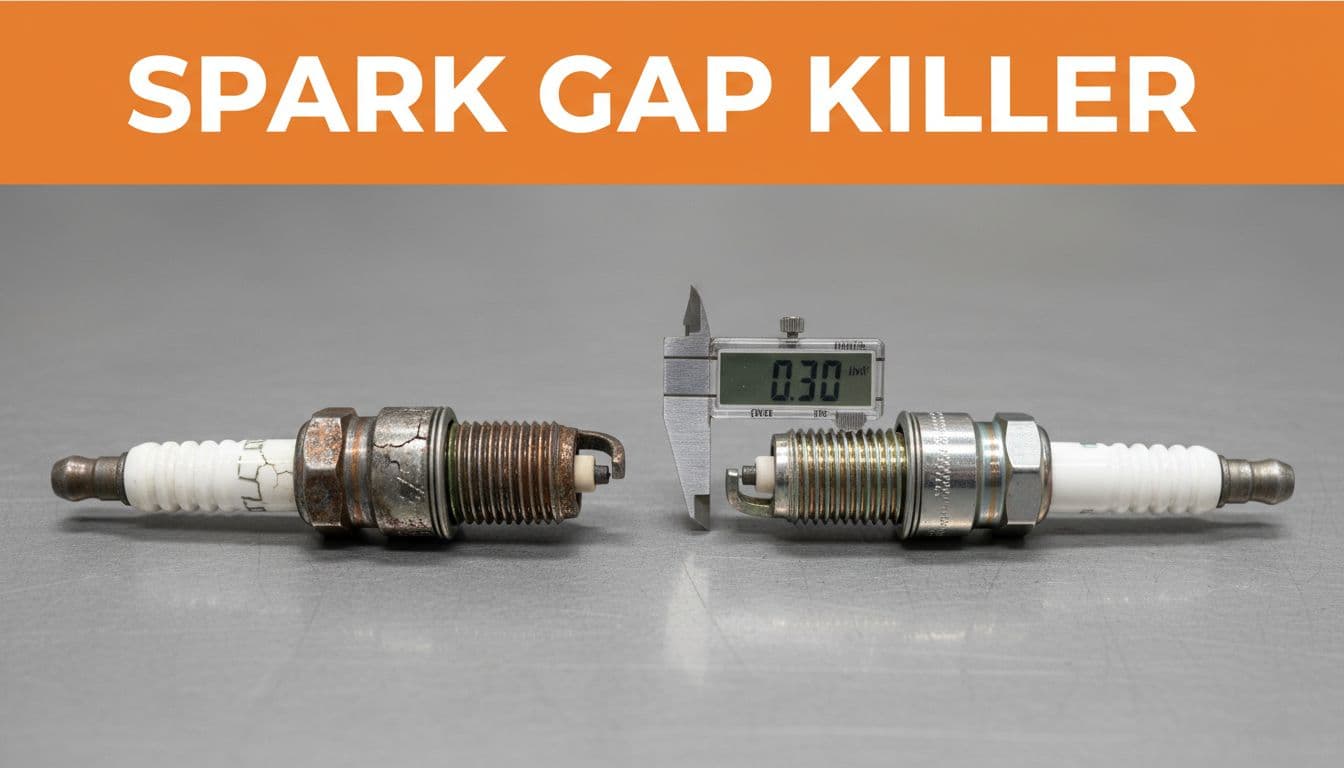
The advice in the video is more aggressive than Ford's long service interval. Instead of waiting until 100,000 miles, the recommendation is to replace plugs every 30,000 to 40,000 miles on the 3.5L EcoBoost. That makes sense on a boosted engine where plug condition matters more than many owners expect.
The video description also calls .030 inch the target gap. If you're replacing plugs, that is the number it recommends for this setup. For parts, the video lists Motorcraft SP-580 spark plugs. For added fitment context, you can also see a Motorcraft SP-580 product listing.
A simple maintenance plan looks like this:
- Pull and inspect the plugs before the 100,000-mile mark.
- Set the replacement plugs to the video's recommended .030-inch gap.
- Replace them on a 30,000 to 40,000-mile schedule if mpg starts slipping.
Why plug gap matters more in a boosted engine
A boosted engine leaves less room for a weak spark. When cylinder pressure climbs, the spark has a harder time jumping the gap, so a small change in plug wear can have a bigger effect than many owners expect.
That is why spark plugs are such an easy mpg trap on the 3.5L EcoBoost. The problem can stay subtle, while the ECU keeps chasing clean combustion in the background. In other words, the issue may be tracked by the ECU every cycle even when you don't feel a miss.
Intercooler heat soak can push the ECU into a richer map
The second fuel economy killer in the video is thermal inefficiency, better known as heat soak. The explanation is direct: the factory intercooler acts like a small aluminum heat sink, and once it absorbs too much heat, it can't cool the incoming charge well enough.
That shows up when you're stuck in traffic, towing, or driving in conditions where airflow is limited and engine load stays high. As intake air temperature climbs, the ECU protects the engine by pulling back timing and enriching the mixture. The video frames it plainly: you're burning extra fuel to keep temperatures under control.
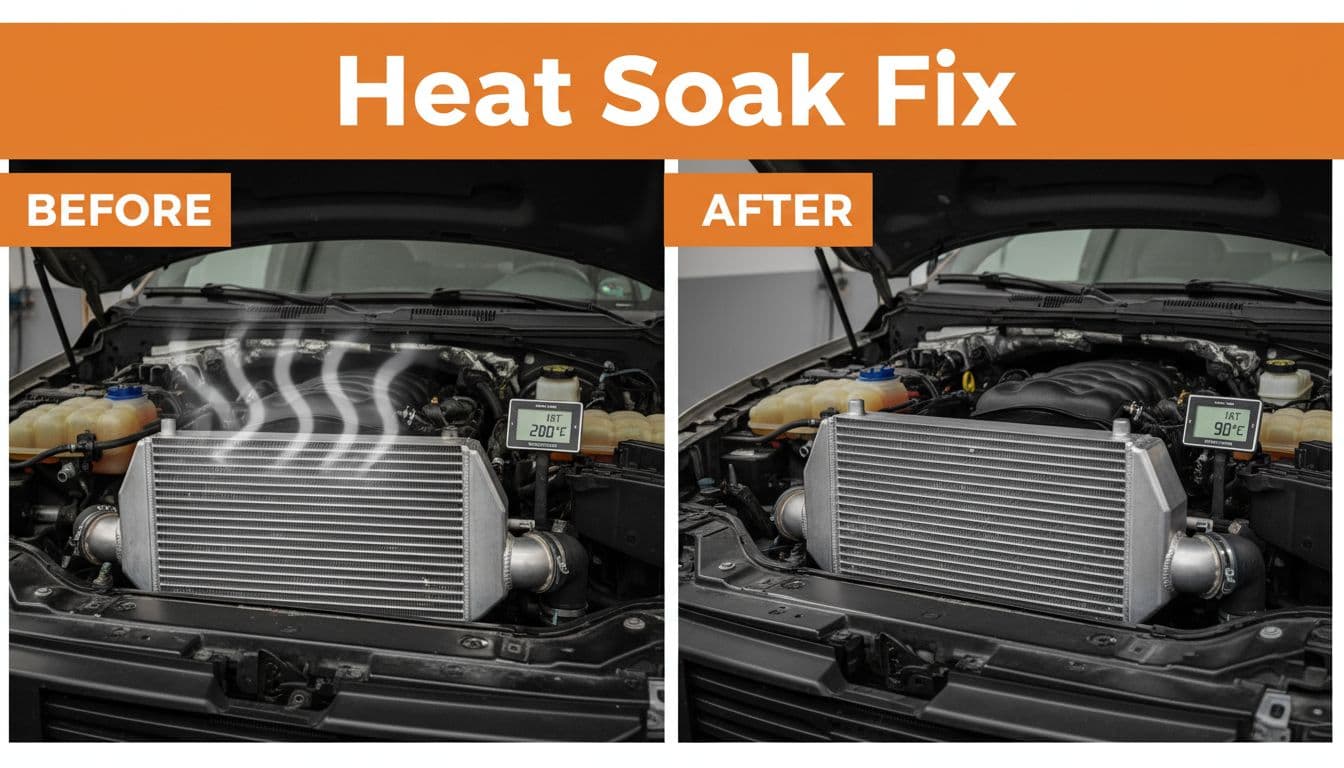
This is where the promised "V8 power with V6 efficiency" can break down. A hot intake charge forces the engine out of the efficient operating window. Instead of staying in the leaner, higher-timing area where economy is better, the engine shifts into a safer, richer strategy.
The upgrade mentioned in the video is the CVF Titan intercooler upgrade. The reason given is the switch to a bar-and-plate design that sheds heat better than the stock unit. If you want a look at current kit fitment and product details, the CVF Titan V2 listing at 5 Star Tuning gives a useful reference point.
The video uses a 2017 Ford Explorer Platinum as the example vehicle, but the point applies broadly to 3.5L EcoBoost owners who tow, sit in traffic, or drive in hot weather.
Where heat soak shows up first
Heat soak usually shows up under real use, not in perfect test conditions. Traffic is a problem because airflow drops. Towing is a problem because engine load stays high. Hot weather makes both worse.
If your mpg falls most during stop-and-go driving or when hauling weight, rising IAT and IAT2 are worth watching. The ECU may be doing exactly what it should for engine safety, but that protection costs fuel.
The $15 PCV valve is one of the most overlooked mpg killers
The third issue in the video is the PCV valve, and it may be the most overlooked of the three. This is a cheap part, but when it gets lazy or clogged, it can upset more than crankcase ventilation.
The warning from the video is that a failing PCV valve can let oil-laden vapors enter the intake path. Once that oil moves through the system, it can coat the intercooler and the intake valves. That contamination raises the chance of knock, and then the ECU steps in with more fuel to protect internal parts.
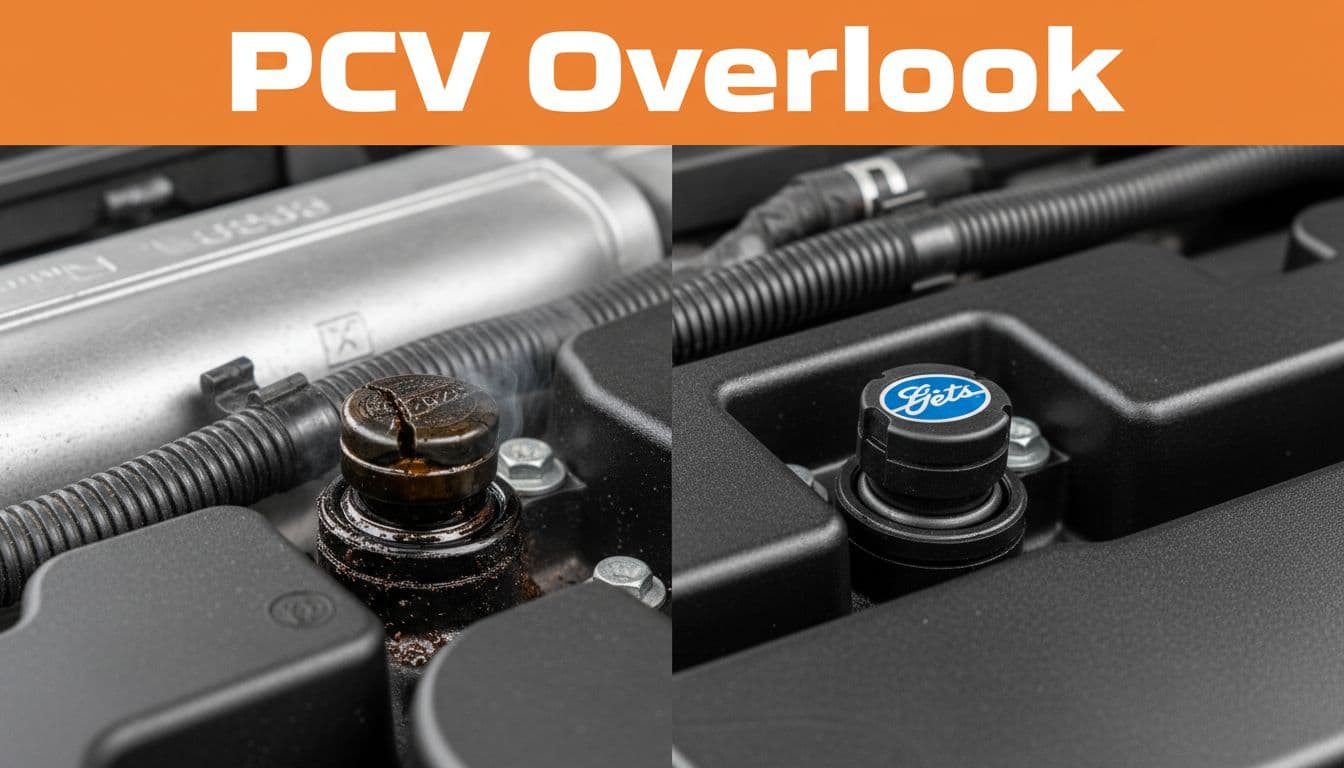
That chain reaction matters because the part itself is cheap, while the side effects aren't. In the video, the replacement part is described as a $15 fix that a shop might charge about $150 to replace. The host also says it can be done in about five minutes.
The listed replacement part is the Gates EMH995 PCV valve. If you want a general refresher on what a bad PCV system can look like, this overview of common PCV valve symptoms gives a good summary.
A simple DIY approach is straightforward:
- Locate the PCV valve on the engine and inspect the hose connection.
- Replace the old valve if it is sticking, dirty, or overdue.
- Recheck for oil vapor signs and watch fuel trims afterward.
An oil catch can can help keep the intake cleaner
The video's workaround for recurring PCV-related contamination is an oil catch can. The idea is simple: trap the oily vapor before it reaches the intake tract and intercooler.
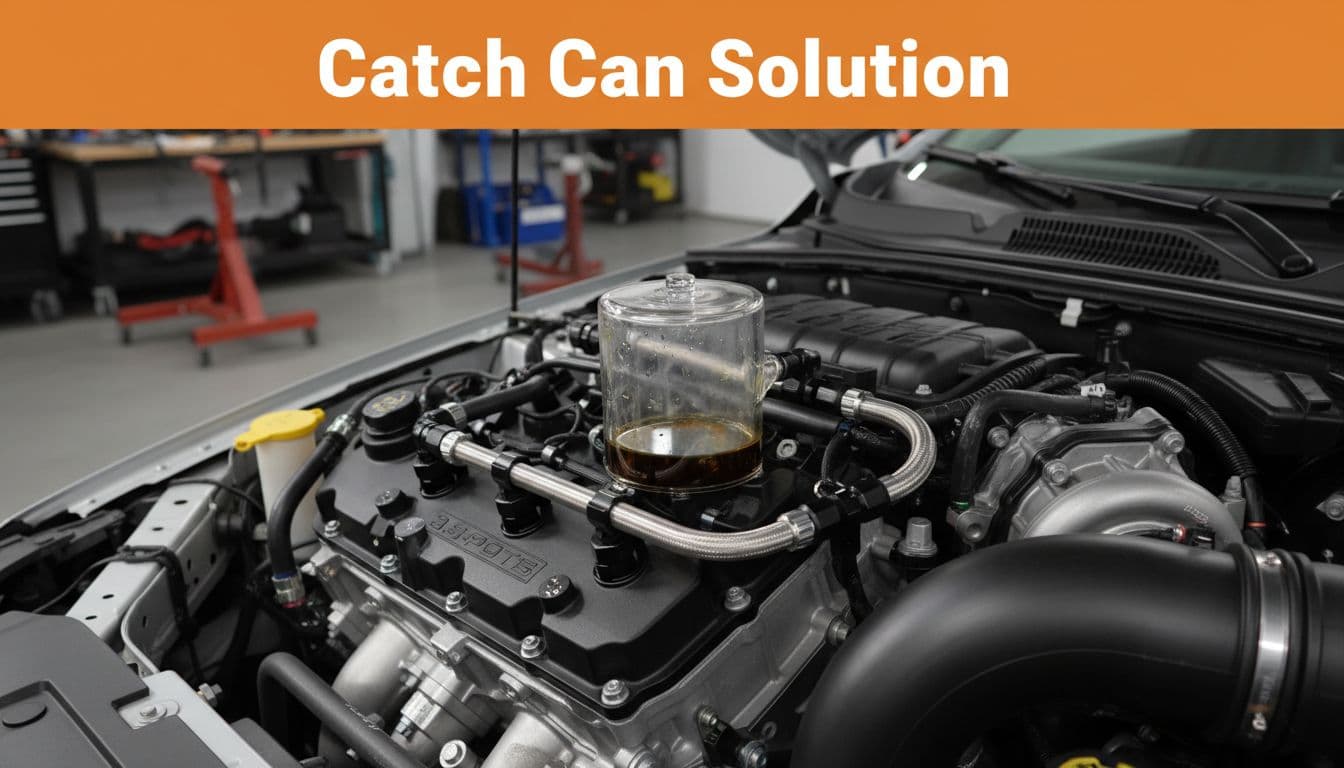
That doesn't replace normal maintenance, but it can reduce how much oil moves through the system. For background on why blow-by control matters on EcoBoost setups, Mishimoto's stock-system catch can article for the F-150 EcoBoost is a useful read.
The channel's point is clear: if you want to prolong the life of the engine and keep the intake path cleaner, a catch can is worth considering.
Is this a Ford design issue, or normal turbo engine maintenance?
The video takes a strong position and calls this a design issue by Ford. That view comes from the fact that owners may end up replacing plugs early, watching intercooler performance closely, and adding a catch can to control oil vapor on an engine sold as an efficient everyday powertrain.
There is a fair argument behind that frustration. When an engine needs closer attention than the maintenance schedule suggests, owners feel the cost at the pump first. Then they feel it again when parts and labor stack up.
At the same time, the practical takeaway matters more than the label. Whether you call it a design flaw or the reality of a high-output turbo V6, the pattern is the same: small support parts can pull the whole system away from peak efficiency.
The host also argues that automakers make a large share of their profits from service and maintenance after the sale. That point is presented as opinion in the video, but it fits the broader message of the channel: routine DIY checks can save money long before a problem becomes major.
The main takeaway for 3.5L EcoBoost owners
If your 3.5L EcoBoost mpg has dropped, start with the small stuff before assuming a major engine problem. Worn plugs, a heat-soaked intercooler, and a neglected PCV valve can all push the ECU to add fuel without giving you a dramatic warning.
The strongest point in the video is that poor fuel economy is often a reaction, not the root failure itself. Find out what the ECU is compensating for, and your mileage may come back without a major repair bill.
A healthy 3.5L EcoBoost can still deliver the power and efficiency mix that made it appealing in the first place. Keeping that balance often comes down to maintenance that looks minor on paper, but matters a lot in the real world.